
Company Formation in Saudi Arabia

Saudi Agriculture License: Rules and Growth Opportunities

Saudi Agriculture License: Rules and Growth Opportunities

Saudi Arabia is investing in a more productive, technology-driven agricultural sector, opening opportunities for established agribusinesses, equipment providers, and international investors. But growing crops, operating a poultry farm, or offering agricultural services requires more than registering a company. Understanding the right agriculture license in Saudi Arabia can help businesses enter the market efficiently and avoid costly approval delays.

Key Takeaways

  • Agricultural licensing depends on the specific activity rather than a single universal permit.
  • Foreign investors generally require MISA registration, Commercial Registration, and applicable agricultural approvals.
  • MEWA provides agricultural licensing services through the Naama platform.
  • Greenhouses, livestock, aquaculture, and agricultural technology are important areas of investment opportunity.
  • Land, water, environmental approvals, and operating costs should be evaluated before committing capital.
  • Correct business activity selection and early regulatory planning can help reduce licensing delays.

What Is an Agriculture License in Saudi Arabia?

An agriculture license authorizes a business or practitioner to conduct specified agricultural activities. The Ministry of Environment, Water and Agriculture (MEWA) oversees approvals across crop production, livestock, fisheries, and related agricultural services.

Importantly, Saudi business licensing is activity-specific. A greenhouse operator, aquaculture investor, and farm-management consultant may have different requirements. Some projects need a construction license before facilities are built, followed by an operational license before production begins.

MEWA provides agricultural licensing services through its Naama digital platform, as outlined in the Ministry’s digital licensing announcement. Applicants can register activities and submit relevant information electronically.

An agricultural approval should not be confused with a company’s Commercial Registration or foreign investment registration. These serve different purposes.

Who Needs an Agriculture License?

Businesses intending to produce agricultural goods or deliver regulated agricultural services should check whether a MEWA license or registration applies.

Common examples include commercial crop farms and greenhouses, poultry and livestock projects, fish farms, beekeeping operations, and agricultural consulting or farm-management services.

The first decision in Saudi business setup is defining exactly what the company will do. A business cultivating vegetables has different approvals from one importing packaged food or supplying greenhouse equipment.

Food processing, manufacturing, trading, and importing may also involve other regulators and permits rather than the same agricultural activity license.

Choosing activities accurately at the outset reduces the risk of registration changes after investment has begun.

What Should Foreign Agricultural Investors Know?

Foreign businesses generally need to complete investment registration with the Ministry of Investment (MISA) before obtaining Commercial Registration and any required sector approvals.

Although investors may still search for a MISA license, Saudi Arabia’s updated Investment Law uses an investment registration framework. This does not replace MEWA’s agricultural permits.

Some activities carry additional conditions or require prior approval, and foreign ownership eligibility depends on the precise activity.

Businesses should assess their proposed legal structure, ownership, approved activities, and supporting documents before applying. An existing overseas company expanding into Saudi Arabia may also need to provide its corporate registration and financial records.

Confirming these requirements early helps establish a realistic project timeline and prevents avoidable delays.

Where Is the Growth in Saudi Agriculture?

The market is growing alongside Saudi Arabia’s food-security and economic diversification goals. According to Ministry figures reported in April 2026, agricultural GDP reached SAR 118 billion in 2025, a 5% increase.

For companies evaluating Saudi Arabia business expansion, several areas stand out.

1. Controlled-Environment Farming

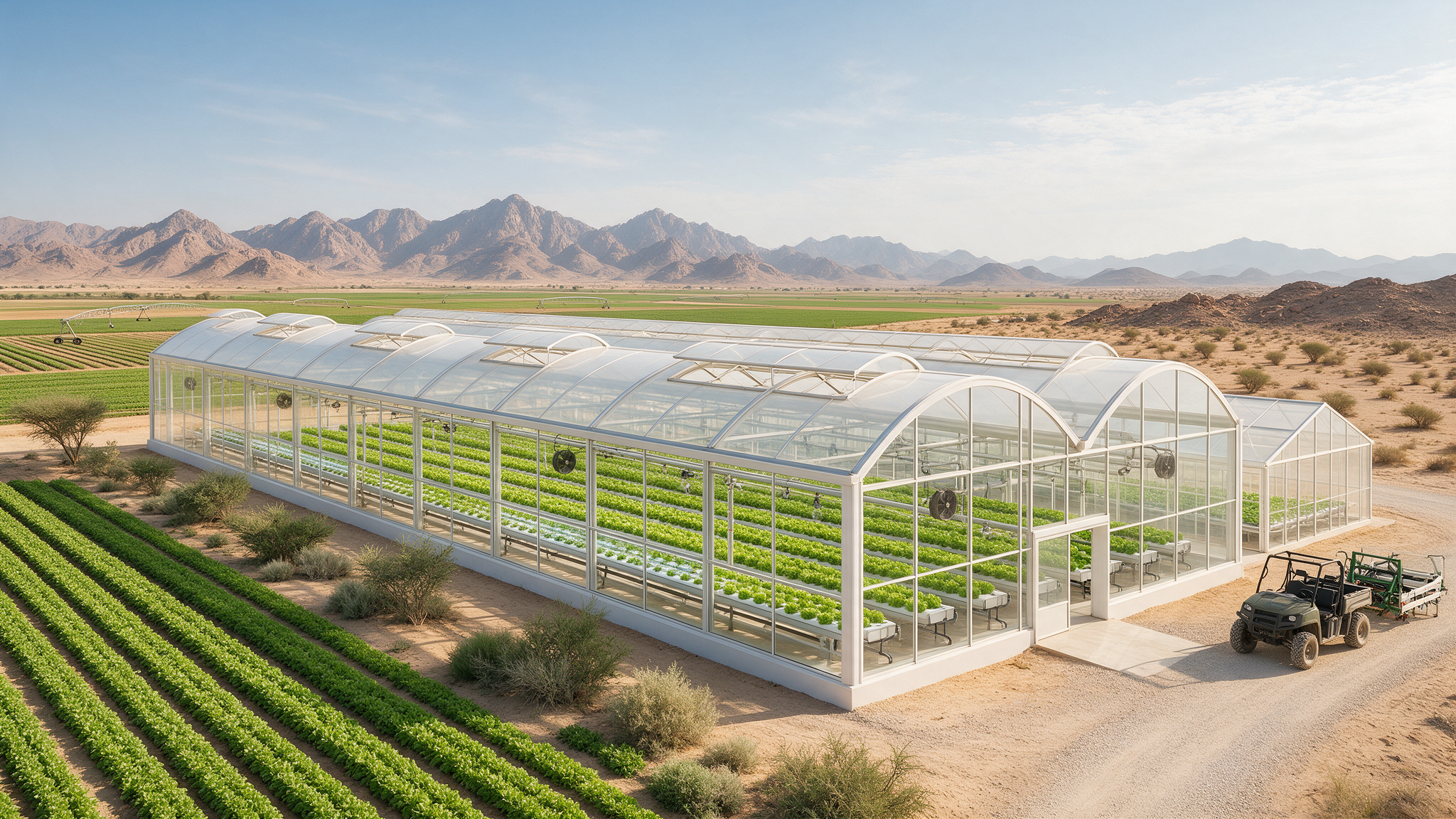
Greenhouses, hydroponics, climate-control systems, and water-efficient irrigation are becoming increasingly important in Saudi Arabia.

A tropical fruit and greenhouse project launched in Jazan in July 2026 involves investment exceeding SAR 600 million, demonstrating opportunities for agricultural producers, technology suppliers, and international partners.

2. Livestock and Aquaculture

Poultry, red meat, fish farming, and supporting infrastructure present opportunities for experienced agricultural operators and suppliers.

In October 2026, an investment showcase in Tabuk highlighted projects involving fish farms, livestock operations, and animal feed production.

3. Agricultural Technology and Services

Demand for efficient food production also creates opportunities beyond traditional farming.

Irrigation systems, farm automation, nurseries, post-harvest handling, and agricultural waste utilization can support producers seeking better productivity and resource management.

These opportunities are particularly relevant to international businesses with proven technologies and operational experience.

What Should Investors Evaluate Before Committing?

Agricultural projects depend heavily on site suitability and operating economics.

Before investing, businesses should verify land-use rights, water availability, groundwater permissions where applicable, energy costs, environmental requirements, logistics, and access to customers.

It is also important to distinguish construction permission from authorization to begin production. Livestock and aquaculture projects may face additional animal-health, biosecurity, and technical requirements.

Employers should also account for Saudization compliance, staffing needs, and ongoing regulatory obligations.

Although agricultural financing programs are available, eligibility and funding conditions must be assessed individually. A promising sector does not automatically make every project commercially viable.

How Can an Established Company Enter the Market?

A practical Saudi market entry plan begins with confirming the intended business activities and foreign investment eligibility.

The next steps generally involve completing applicable MISA investment registration, obtaining Commercial Registration, identifying MEWA approvals, and securing any necessary site, construction, and operational permissions.

Companies must also prepare for banking, staffing, tax registration, and other operational requirements.

Working with Creative Zone Saudi Arabia can help international businesses organize the company establishment process, coordinate documentation, and navigate the regulatory requirements relevant to their investment.

Expand Into Saudi Arabia’s Agricultural Sector With Creative Zone

Saudi Arabia’s agricultural transformation presents opportunities for established businesses ready to bring expertise, investment, and technology to the Kingdom.

Creative Zone supports foreign companies with investment registration, company establishment, documentation, government coordination, and corporate banking assistance. Our experts can help you navigate the business setup process and identify the additional approvals your agricultural activities may require.

Ready to explore agricultural investment opportunities in Saudi Arabia? Contact Creative Zone today to discuss your expansion plans and take the next step toward establishing your presence in the Kingdom.


Company Formation in Saudi Arabia

Iqama Renewal in Saudi Arabia: 6 Steps for Employers

Iqama Renewal in Saudi Arabia: 6 Steps for Employers

An expired Iqama can create avoidable complications for employees and their employers. For businesses managing international teams in Saudi Arabia, residency renewals should be a routine compliance process, not a last-minute scramble. The solution is a repeatable workflow that connects HR records, work permits, health insurance, payments, and government platforms.

Key Takeaways

  • Iqama renewal for private-sector expatriate employees is generally managed by employers.
  • A valid work permit and required health insurance are important renewal prerequisites.
  • Qiwa supports work permit renewals, while Absher Business handles Iqama renewals.
  • Early checks help identify passport, payment, or employee-status problems before expiry.
  • A clear renewal calendar and confirmation process reduce administrative risks.

Step 1: Build an Iqama Renewal Calendar

Start by creating a central record of every expatriate employee’s Iqama expiry date, passport validity, work permit, and insurance coverage. Include the employee’s name, responsible department, renewal owner, and application status.

A practical approach is to set internal reminders 90, 60, and 30 days before expiry. These are recommended planning checkpoints, not statutory deadlines. They give employers time to resolve discrepancies, obtain approvals, and budget for renewals.

For a growing business, a shared tracker is far more reliable than reminders buried in individual inboxes.

Step 2: Check Employee and Employer Eligibility

Before starting the renewal, review both the employee’s status and the establishment’s eligibility.

For employees, confirm that:

  • Their passport remains valid.
  • Required fingerprints and photographs are registered.
  • Outstanding traffic violations are cleared.
  • They are not recorded as absent from work.
  • Applicable dependent-related conditions are satisfied.

For employers, Nitaqat compliance is another important consideration. The Ministry of Human Resources and Social Development (HRSD) states that establishments in the red category cannot issue or renew work permits.

Identifying restrictions early gives the business time to address them before they interfere with residency renewals.

Step 3: Renew the Work Permit Through Qiwa

An Iqama and a work permit are separate documents. For expatriate employees who require work permits, the permit must be valid before their residency can be renewed.

According to the HRSD’s official work permit renewal guidance, employers can complete the process through Qiwa by selecting their establishment, identifying the relevant employees, submitting the request, and paying the applicable charges through SADAD.

HRSD permits work permit renewals when 180 days or fewer remain before expiry.

Although the renewed work permit may appear in Qiwa sooner, payment status can take up to 24 hours to update in passport systems. Employers should account for this potential delay.

Step 4: Confirm Health Insurance and Budget for Renewal Costs

Valid health insurance is an important condition for Iqama renewal. Employers should confirm that coverage is active and correctly associated with the employee’s residency details.

Insurance requirements for eligible family members must also be considered.

Beyond insurance, employers should budget for applicable work permit charges, expatriate levies, residency fees, and platform transaction costs.

The exact amount depends on the employee’s circumstances, selected renewal period, and applicable regulations.

Finance and HR teams should coordinate payment approvals before starting the final renewal transaction.

Step 5: Complete the Iqama Renewal Through Absher Business

The Iqama renewal process in Saudi Arabia for eligible company employees is completed through Absher Business.

Once the necessary prerequisites and payments are in place:

  1. Log in to the establishment’s Absher Business account.
  2. Select “My Business Services.”
  3. Choose “Iqama Renewal.”
  4. Select the relevant employee.
  5. Follow the instructions and verify the renewal details.
  6. Confirm that the residency record reflects the renewed validity.

Available renewal periods and charges depend on the worker’s category and applicable rules.

Importantly, employers should not assume that a successful payment means the renewal itself has been completed.

Step 6: Verify the Renewal and Update Employee Records

Once the renewal is confirmed, update the company’s records and communicate the new expiry date to the employee.

Keep a record of payment references, renewal confirmations, and any issues encountered.

Businesses should also review outstanding renewals regularly and assign responsibility for unresolved cases.

For employers managing larger workforces, this process can form part of broader Saudization compliance monitoring and workforce administration.

A well-maintained system helps prevent repeated mistakes and provides better visibility over upcoming compliance obligations.

Make Iqama Renewals Easier With Creative Zone

Managing employee residency is an ongoing responsibility, especially for international businesses establishing operations in Saudi Arabia.

Creative Zone supports Saudi market entry and provides GRO services in Saudi Arabia covering Iqama renewals, work permit coordination, visa-related processes, and government administration.

Our team helps businesses navigate procedural requirements and manage essential administrative responsibilities, allowing leadership teams to dedicate more attention to business growth.

Need help managing employee Iqama renewals or establishing your business in Saudi Arabia? Contact Creative Zone today to discuss your requirements and discover how our team can support your operations.

Company Formation in Saudi Arabia

Saudi License Modification: Activities & Shareholders

Saudi License Modification: Activities & Shareholders

Businesses rarely stay exactly as they were on incorporation day. A company may add a service, bring in an investor, move premises, change management, or restructure ownership. In Saudi Arabia, these changes should be reflected across the registrations and licenses that support the business. A planned modification process helps keep the legal record aligned with actual operations.

Key Takeaways

  • A Saudi license modification may affect more than the Commercial Registration.
  • Adding activities can trigger sector-specific or municipal approvals.
  • Shareholder changes may require amendments to the Articles of Association and related records.
  • Foreign-invested companies should keep Ministry of Investment records aligned with ownership and activity changes.
  • Address, management, capital, contact, and e-commerce data should remain consistent across relevant records.
  • After a CR amendment, businesses should check connected licenses and registrations for follow-up updates.

Start by Mapping the Change

A Saudi license modification should begin by identifying exactly what is changing, whether it is an activity, shareholder, capital amount, manager, trade name, address, contact detail, or e-commerce information.

The Ministry of Commerce allows companies to modify several categories of main Commercial Registration data electronically. The practical approach is to start with the business decision, then identify every corporate and government record affected by it.

Adding a New Business Activity

Adding an activity is a common reason to update a business license in Saudi Arabia. Companies can add business activities to their main Commercial Registration, but the CR update is not always the only requirement.

Some activities are regulated and may require approval or licensing from another authority. Balady also provides a service for modifying commercial activity licenses, and permits that no longer match the updated activity may be canceled.

Before launching a new revenue line, check the activity classification, sector approvals, premises requirements, and any operating conditions that apply.

Changing Shareholders or Ownership

An ownership change can require more than editing the Commercial Registration. Changes involving partners, ownership percentages, capital, or governance can require amendments to the company’s Articles of Association.

For Saudi company registration, businesses should also consider whether the change affects beneficial-owner information, management authority, banking mandates, or signing rights. The Ministry of Commerce provides an electronic process for amending Articles of Association, with the relevant approvals required depending on the company and amendment.

Coordinating these updates helps prevent different records from showing different ownership structures.

Updating Company Details

Administrative changes can still affect day-to-day operations. A Commercial Registration record in Saudi Arabia may need attention when the company changes its trade name, address, managers or directors, capital, contact information, e-commerce data, or activities.

Saudi Arabia also uses an annual confirmation process for Commercial Registration data. This makes ongoing record accuracy important rather than something to review only when a bank, customer, or authority identifies a mismatch.

Foreign Investors Have an Additional Layer

For foreign-invested businesses, the investment record also matters. Although MISA license remains a commonly used search term, Saudi Arabia’s current Investment Law operates through investor registration. A foreign investor must register with the Ministry of Investment before engaging in investment activities in the Kingdom.

When ownership or activities change, the business should confirm whether its Ministry of Investment information also needs to be updated and whether the revised activity is permitted for the investor. Saudi Arabia’s updated Investment Law sets out the current registration framework.

The goal is consistency across the investment record, Commercial Registration, constitutional documents, and operating approvals.

Review the Records Downstream

A CR amendment may be central to the process, but it is not always the final step. Depending on the change, related government registrations in Saudi Arabia may also need attention.

A new activity can affect a municipal license. A new address can affect national-address and operating records. An ownership change can affect beneficial-owner information and bank mandates. Management changes may require updates wherever the previous manager was recorded as an authorized person.

The exact impact depends on the modification, which is why a record-by-record review is safer than assuming one submission updates everything automatically.

Follow a Clear Modification Sequence

For effective Saudi business licensing, sequence matters. First, define the proposed change and confirm that the new activity or ownership structure is permitted. Next, identify any corporate approvals or Articles of Association amendments. For foreign investors, review the Ministry of Investment record where relevant. Then complete the Commercial Registration amendment and check municipal, banking, tax, employment, address, and other connected records.

This approach reduces duplicated work and makes regulatory dependencies easier to identify before they interrupt operations.

Keep Your Saudi Business Records Aligned With Creative Zone

Business growth should not create a compliance gap. Creative Zone Saudi Arabia supports companies with business support services in Saudi Arabia, including licensing, modifications, regulatory coordination, and ongoing setup support.

Whether you are adding activities, changing shareholders, restructuring management, or updating company information, our KSA experts can help map the required steps and coordinate the process. Visit Creative Zone Saudi Arabia to explore our services, or speak to our KSA experts about your planned company modification.

Company Formation in Saudi Arabia

Saudi Vision 2030: Opportunities for Foreign Businesses

Saudi Vision 2030: Opportunities for Foreign Businesses

Saudi Vision 2030 is doing more than funding major projects. It is reshaping where demand is growing, how international companies enter the Kingdom, what large buyers expect from suppliers, and how businesses plan their local workforce. For foreign companies, the opportunity is significant, but the strongest market entries are built around commercial signals rather than headlines alone.

Key Takeaways

  • Vision 2030 is expanding private-sector opportunity across technology, tourism, logistics, manufacturing, mining, healthcare, energy, and other non-oil industries.
  • Saudi Arabia’s investment framework is becoming more transparent and investor-focused.
  • Local presence can matter commercially, particularly for multinational companies pursuing certain government contracts.
  • Saudization requirements are becoming more detailed by profession and sector.
  • Project timing, procurement activity, regulatory updates, and localization rules are important signals to watch.

Vision 2030 Is Changing Where Growth Happens

Saudi Arabia’s 2025 Vision 2030 reporting showed the private sector contributing 51 percent of GDP, while non-oil activity continued to expand. GASTAT also reported that non-oil activities were the largest contributor to real GDP growth in the first quarter of 2026.

For companies considering Saudi market entry, this matters because demand is increasingly spread across a wider economic base. Opportunities now extend well beyond oil and construction into digital transformation, logistics, tourism, advanced manufacturing, healthcare, mining, financial services, and other growing industries.

Opportunity Is Broader Than the Mega-Projects

Vision 2030 is often associated with major developments, but foreign companies should also look at the supply chains forming around them. A tourism destination, industrial zone, logistics hub, data center, or manufacturing program can create secondary demand for technology, consulting, recruitment, facilities management, cybersecurity, engineering, training, and finance.

That makes Saudi Arabia business expansion relevant even for companies that will never bid directly on a flagship project. The practical question is which sectors are receiving sustained investment and what capabilities they will need over the next several years.

The Investment Environment Is Becoming More Formalized

Saudi Arabia’s updated Investment Law aims to facilitate investment establishment, protect investor rights, support transparent procedures, and provide equal treatment for local and foreign investors in similar circumstances, subject to applicable laws and restricted activities.

For foreign company setup in Saudi Arabia, the key is to start with the activity. Ownership, licensing, legal form, sector approvals, and operating requirements should match what the business will actually do. A structure that works for consulting may not suit manufacturing, regulated services, or government contracting.

Local Presence Can Affect Commercial Access

Vision 2030 also places greater emphasis on bringing decision-making, talent, and spending into the Kingdom. Saudi rules restrict certain government contracting with foreign companies that maintain their regional headquarters outside the Kingdom, subject to defined exceptions.

A RHQ license in Saudi Arabia is not a universal requirement for every foreign business, but it can be strategically important for qualifying multinational groups pursuing government-related opportunities. Companies should assess the rule against their customer base, group structure, and long-term regional plans.

Workforce Localization Is a Commercial Planning Issue

Saudization is becoming increasingly role-specific. In 2026, Saudi authorities implemented higher localization rates in areas including marketing, sales, procurement, and selected tourism professions. The Nitaqat program is also entering a new phase aimed at increasing Saudi participation across the private sector.

That makes Saudization compliance part of operating and workforce planning. Businesses should model which roles must be localized, when thresholds apply, how contracts are documented, and how hiring decisions affect establishment classification before recruitment begins.

Watch Project Sequencing, Not Just Announcements

Foreign businesses should track whether an opportunity is moving from ambition to procurement. Useful signals include budget allocations, tender releases, contract awards, new licensing categories, infrastructure completion, and hiring activity.

This is particularly important for businesses planning to establish a presence in Saudi Arabia around major projects. Reuters reported in 2025 that Saudi authorities were recalibrating and prioritizing spending as oil prices changed. The lesson for businesses is simple: validate the current commercial pipeline before committing people, premises, and capital.

What Foreign Businesses Should Do Before Entering

A strong entry plan should first answer who will buy from you, whether your customers are private or government-linked, whether your activity needs sector approval, what local team you need, and how localization or RHQ rules could affect the route to market.

The right Saudi business incorporation approach follows from those answers. Legal structure should support the revenue model, not lead it.

Build a Saudi Entry Plan Around the Market

Vision 2030 has created a deeper and more diversified opportunity set for international companies, but successful entry still depends on the right structure, license, operating model, and compliance plan.

Creative Zone Saudi Arabia supports foreign entrepreneurs and companies from market-entry planning through establishment and ongoing coordination. If you are evaluating company formation in Saudi Arabia, contact our team to map the setup requirements around your commercial goals and build a clearer route into the Saudi market.